
WATER LEAK DETECTION SYDNEY

Water leaks in commercial and strata buildings are rarely straightforward. What appears as a damp patch on an interior wall or ceiling usually has its source metres away on the external facade, hidden behind cladding, or concealed within a joint or membrane high above street level. Left undetected, even a minor leak can cause significant structural damage, mould growth, and costly remediation work.


At Difficult Access Services, we provide professional water leak detection services for commercial and strata buildings across Sydney. Our rope access leak detection specialists can inspect and test the external building envelope at any height, getting directly to where leaks originate, including hidden leaks that conventional methods would miss, without the need for scaffolding or boom lifts. This gives us a significant advantage over conventional inspection methods, which are often limited to internal access and ground-level observation.


For water leak detection in Sydney, you can trust that Difficult Access Services will locate water leaks with accuracy and deliver reliable, accurate leak detection before the damage escalates.
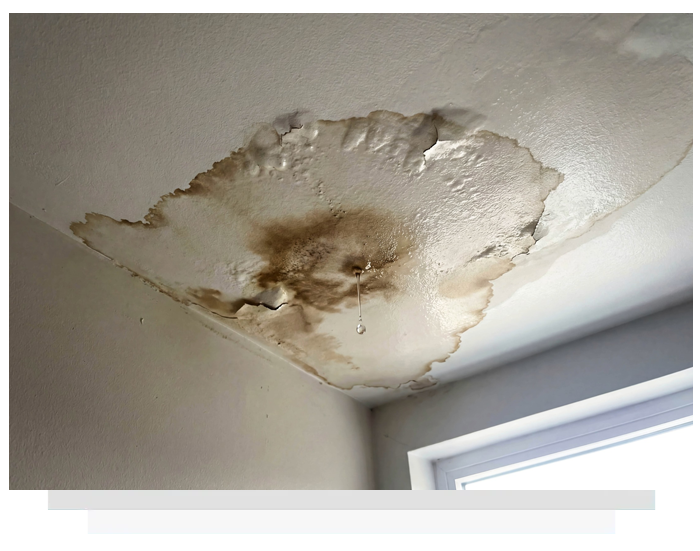
Water-damaged ceiling with peeling paint, showing brown staining and bubbling, in a corner of a room.

Our Water Leak Detection Services Include:
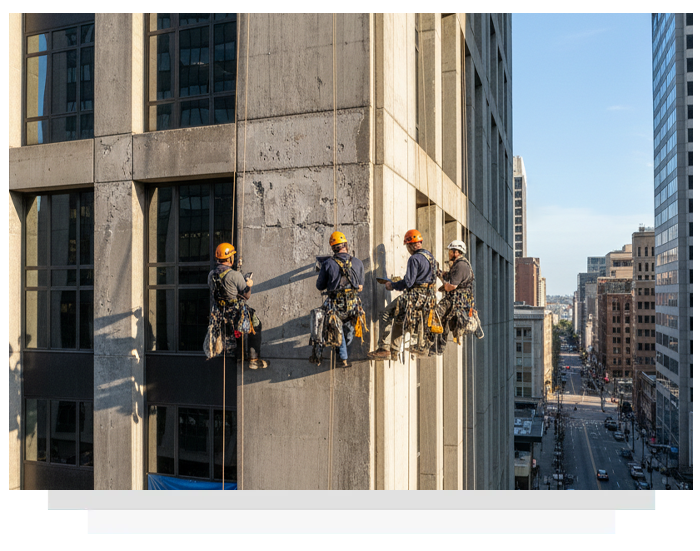
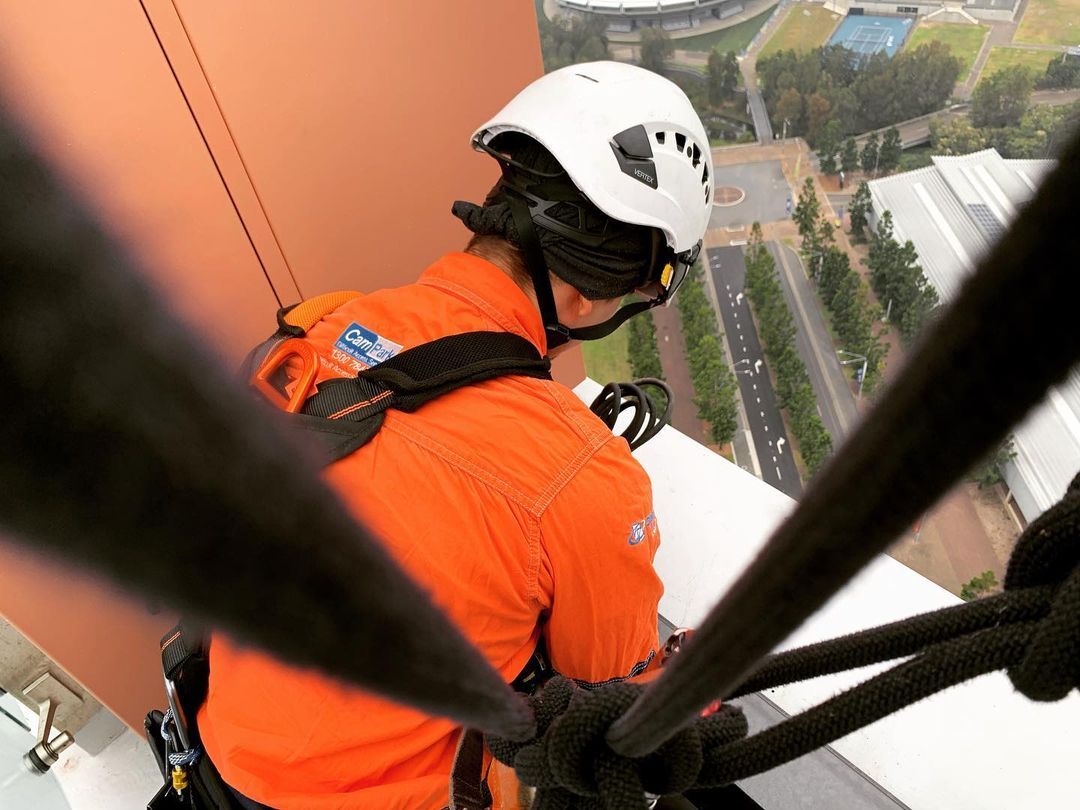
Four abseilers on a high-rise building corner, suspended by ropes.

External Facade Inspection

We conduct thorough visual and physical inspections of the external building envelope at height, identifying cracks, failed seals, deteriorated joints, and other potential leaks that are invisible from ground level or inside the building.
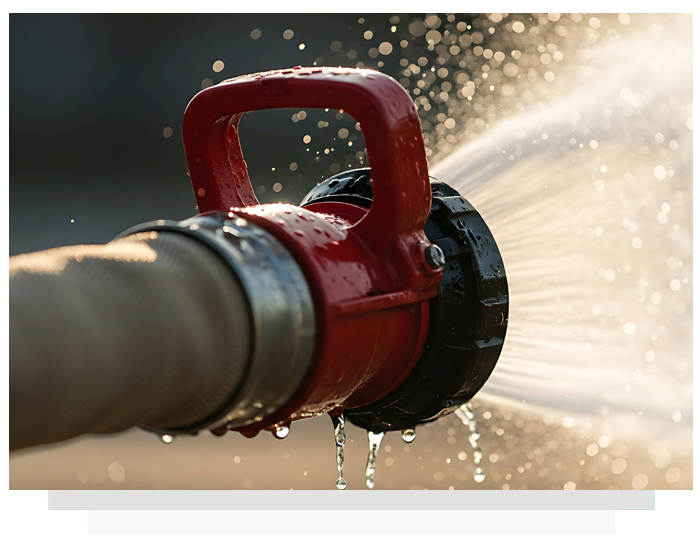
Fire hose spraying water; red nozzle, close-up.

Spray & Hose Testing

We simulate rainfall conditions directly on the external facade, window frames, and building joints to identify exactly where water is entering the structure. This method is particularly effective for pinpointing leaks that only manifest during or after rain.
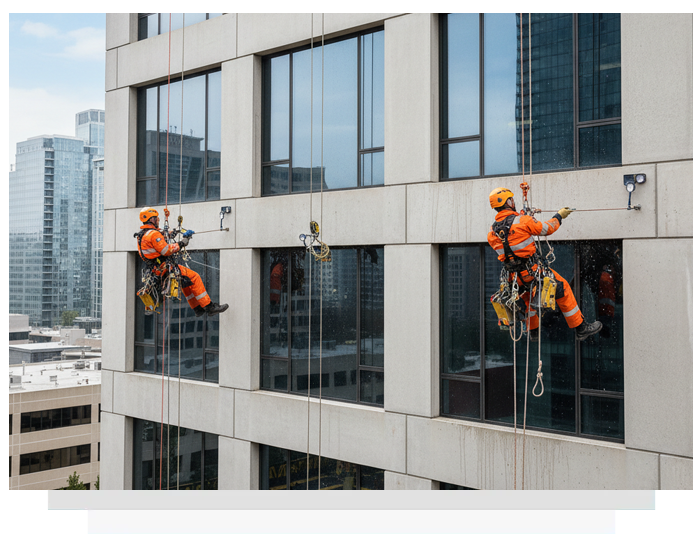
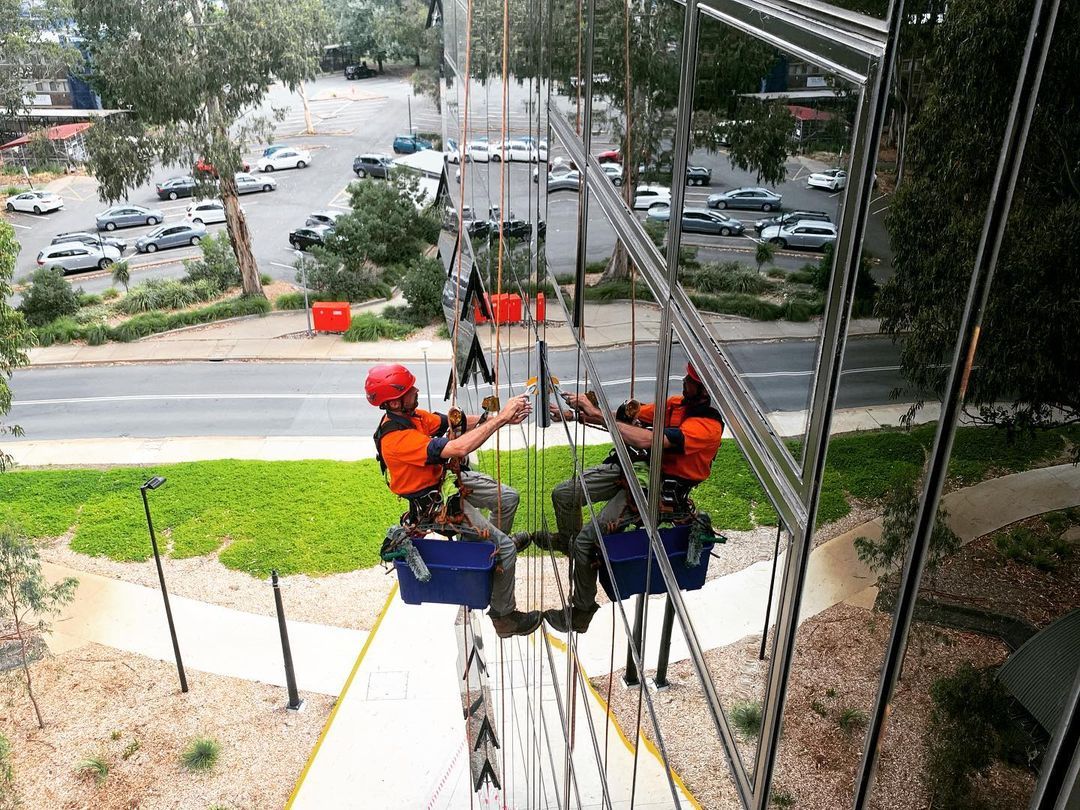
Two abseilers in orange suits rappelling down a modern skyscraper, cleaning windows.

Window & Joint Seal Testing

Failing window seals and expansion joints are among the most common sources of water ingress in high-rise and multi-storey buildings. We test and assess these areas at height, identifying failure points with precision.
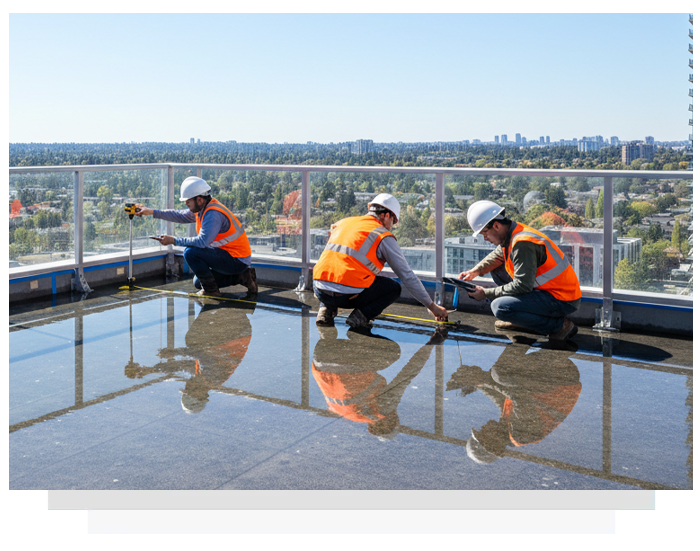
Three workers in orange vests and hard hats inspect a wet rooftop, measuring and inspecting. City skyline in the background.

Balcony & Podium Flood Testing

Elevated balconies and podium areas are highly susceptible to membrane failure and drainage issues. We carry out controlled flood testing to assess waterproofing integrity and identify where water is breaching the membrane.
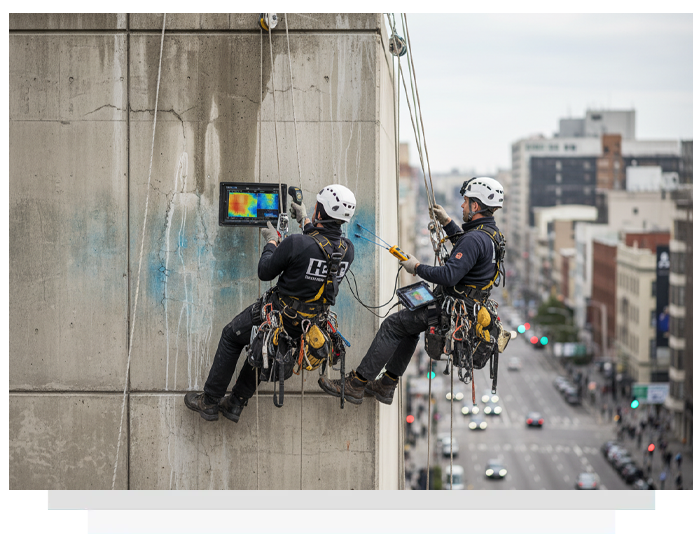
Two workers suspended from a building, using ropes and a thermal camera, surveying a cityscape.

Moisture Detection

Using specialist leak detection equipment, we assess walls, floors, and structural elements for hidden water presence, helping to map the extent of ingress and trace it back to its source.
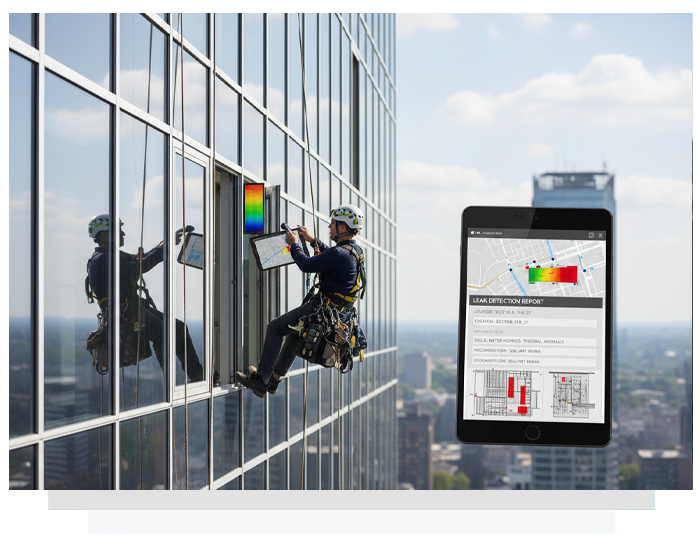
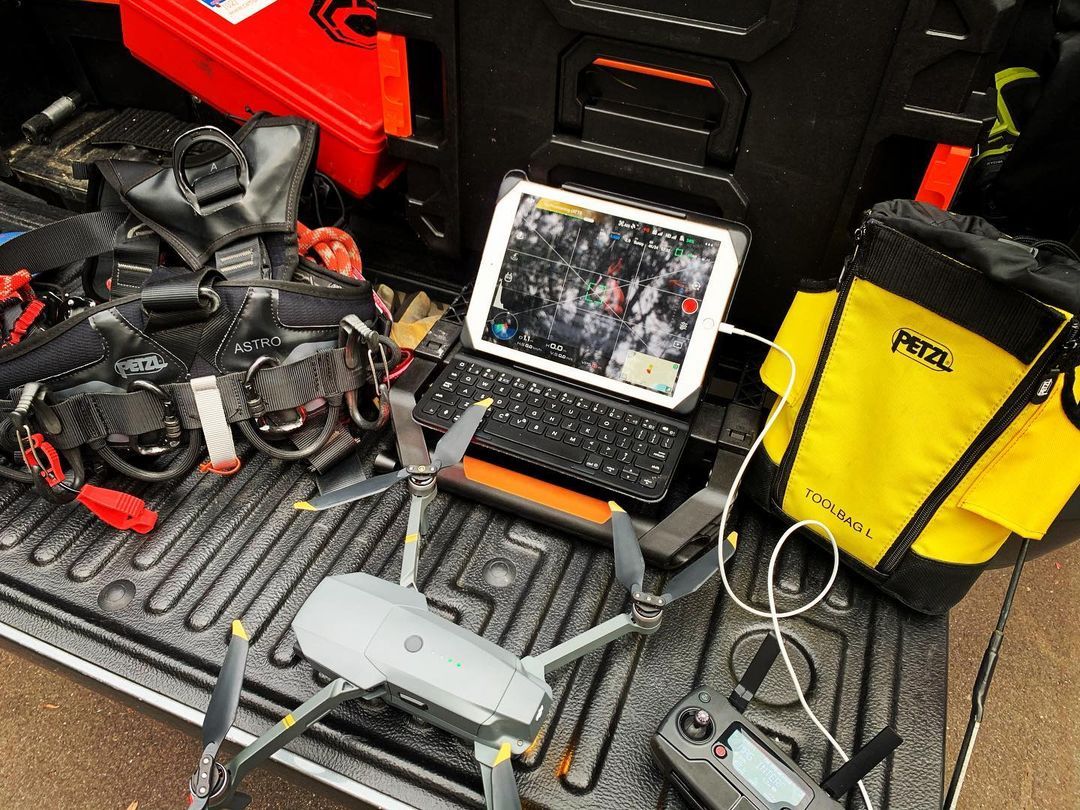
Abseiler rappelling on skyscraper, using tablet for data.

Leak Detection Reports & Documentation

Following every inspection and test, we provide detailed reports documenting findings, identified entry points, and recommendations for remediation. These reports are particularly valuable for strata managers, building owners, and insurers.

The Difficult Access Difference

height safety tools

Specialists in Rope Access

Water ingress in multi-storey buildings almost always originates from the external envelope. Our rope access leak detection specialists access the facade, joints, balconies, and roof edges at any height, reaching the actual source of the leak rather than just the symptoms visible inside.

high rise building

Decades of Experience in High-Rise Maintenance

With over 30 years working on Sydney's commercial and strata buildings, our leak detection specialists understand how water behaves in complex structures and how to locate concealed leaks efficiently, no matter how well hidden the source.

hand with safety shield

Minimal Disruption, Maximum Efficiency

Rope access requires no scaffolding, no boom lifts, and no road closures. We carry out inspections and testing quickly and with minimal impact on building occupants and daily operations.

checklist

Compliance & Safety First

All work is carried out in full compliance with Australian standards and industry safety regulations. Our abseilers are rigorously trained and certified.
Water Leak Detection Sydney FAQs

  • Why is water leak detection important for commercial and strata buildings?

    Water ingress (or water damage) is one of the most damaging and costly problems commercial properties and strata buildings can face. Hidden leaks can affect multiple tenancies, compromise structural integrity, promote mould growth, and create liability issues for owners and managers. Water infiltration near electrical systems can also create serious safety risks. The longer it takes to find and fix leaks, the more extensive and costly repairs become, and unresolved moisture issues can significantly reduce property values and waste thousands. Early detection of hidden water leaks is critical to limiting damage and keeping remediation costs manageable.

  • Why is rope access useful for water leak detection?

    Most water leaks in multi-storey buildings originate from the external building envelope, including facades, window frames, joints, balcony membranes, and roof edges. These areas are often inaccessible without working at height. Rope access allows our leak detection specialists to get directly to the suspected source on the external face, carry out testing, and accurately detect leaks and entry points that would simply be missed from inside the building or from the ground. Our non-invasive leak detection methods mean we locate leaks without causing damage to the property in the process.

  • What is spray and hose testing?

    Spray and hose testing involves directing controlled water flow onto specific areas of the external facade to simulate rainfall and replicate the conditions under which a leak occurs. It is one of the most reliable methods for identifying the precise entry point of water ingress, particularly around window frames, joints, and facade penetrations.

  • How do you find a leak that only appears after heavy rain?

    This is one of the most common challenges in leak detection. Our spray and hose testing replicates rain conditions directly on the external surface, allowing us to isolate the entry point without waiting for the next weather event. In some cases, moisture detection equipment is used alongside testing to trace water that has travelled through the structure before becoming visible.

  • What signs should I look for that might indicate a water leak?

    If you've noticed wet patches, yellow stains, or paint bubbling on interior walls and ceilings, these are common signs of a hidden water leak. Persistent musty odours can also signal concealed moisture within the structure. In strata buildings, toilet leaks, hot water system failures, and reduced water pressure across fixtures can all point to a more significant issue in the building's plumbing. If your building may have a leak, it is worth arranging a professional inspection sooner rather than later.

  • What detection methods do you use?

    Our leak detection specialists use a range of non-invasive leak detection methods and cutting-edge technology depending on the nature and location of the suspected leak. These include moisture meters to measure moisture levels within building materials, thermal imaging to detect temperature differences caused by water behind walls and under floors, acoustic detection equipment to pick up the sounds of escaping water, and pressure testing to identify pressure loss as an early indicator of leakage. We assess each situation and apply the most appropriate combination of methods to locate leaks accurately and efficiently.

  • What is the difference between water leak detection and water leak remediation?

    Our leak detection services cover the process of locating the source of water ingress and understanding how it is entering the structure. Remediation is the process of repairing and waterproofing to fix leaks once their entry points have been identified. We handle both, and in most cases, detection comes first to make sure we deliver repair solutions that are targeted and effective. You can find out more about our water leak remediation services on our dedicated page.

  • Can you detect leaks in balconies and podium areas?

    Yes. Elevated balconies and podium slabs are common sources of water ingress in strata buildings. This is often due to membrane failure, inadequate drainage, or deteriorated waterproofing. We carry out controlled flood testing using specialist equipment on these areas to assess membrane integrity and pinpoint where water is breaching the surface.

  • How long does a water leak detection inspection take?

    This depends on the size and complexity of the building and the nature of the suspected leak. A targeted inspection of a specific area can be completed in a few hours, while a full building envelope inspection may take longer. We provide a clear scope and timeline before commencing any work.

  • Should leak detection be carried out regularly, even without visible signs of a problem?

    Yes. Working with a professional leak detection company on a regular basis allows you to identify small leaks and minor issues before they develop into major problems and expensive repairs. For commercial and strata buildings, proactive leak detection services are a sound maintenance practice that can prevent significant repair costs and protect the long-term value and safety of the asset. For expert leak detection with reliable service in Sydney, look no further than Difficult Access Services.

  • Why choose Difficult Access Services over a traditional leak detection company?

    Most leak detection companies rely on internal inspections and ground-level observation, which means they can identify the symptoms of a leak but often can't access the external source directly. What sets us apart is our rope access capability. Our abseilers descend directly to the building envelope at any height, testing and inspecting the exact areas where water is entering the structure. It's a level of access that a conventional leak detection company simply can't match without expensive scaffolding or equipment.

  • Can you find a hidden water leak without tearing into walls or surfaces?

    Yes. Locating a hidden water leak is one of the most common challenges we deal with in commercial and strata buildings. We use non-invasive methods including moisture meters, thermal imaging, and acoustic detection equipment to trace water through the structure without the need for destructive investigation. In most cases, we can pinpoint the source accurately before any opening up of walls or surfaces is required.

  • What is non-invasive leak detection and why does it matter?

    Non-invasive leak detection refers to methods that locate the source of water ingress without cutting, drilling, or damaging building materials in the process. For building owners and strata managers, this matters because it keeps disruption and repair costs to a minimum. We use thermal imaging, moisture meters (or moisture sensors), and acoustic equipment to assess the structure, find hidden moisture and trace leaks back to their source, with no unnecessary damage along the way.

  • What do I receive after a leak detection inspection?

    Following every inspection and testing job, our leak detection specialists provide a detailed written report documenting findings, identified entry points, and recommendations for remediation. This accurate leak detection report is particularly useful for building owners, strata managers, and insurers when assessing next steps.

  • How do I get a quote for water leak detection in Sydney?

    Get in touch with our leak detection specialists directly via phone or our contact form. We'll discuss your building's situation, outline the most appropriate leak detection services for your needs, and provide a clear, obligation-free quote for a professional service.

LET US HANDLE YOUR DIFFICULT ACCESS WATER LEAK DETECTION NEEDS