CONCRETE SEALING SYDNEY

Unsealed concrete absorbs moisture, contaminants, and pollutants that steadily degrade a structure from within. For buildings exposed to Sydney's coastal air, UV radiation, and rain, professional concrete sealing is one of the most cost-effective forms of preventative maintenance available.


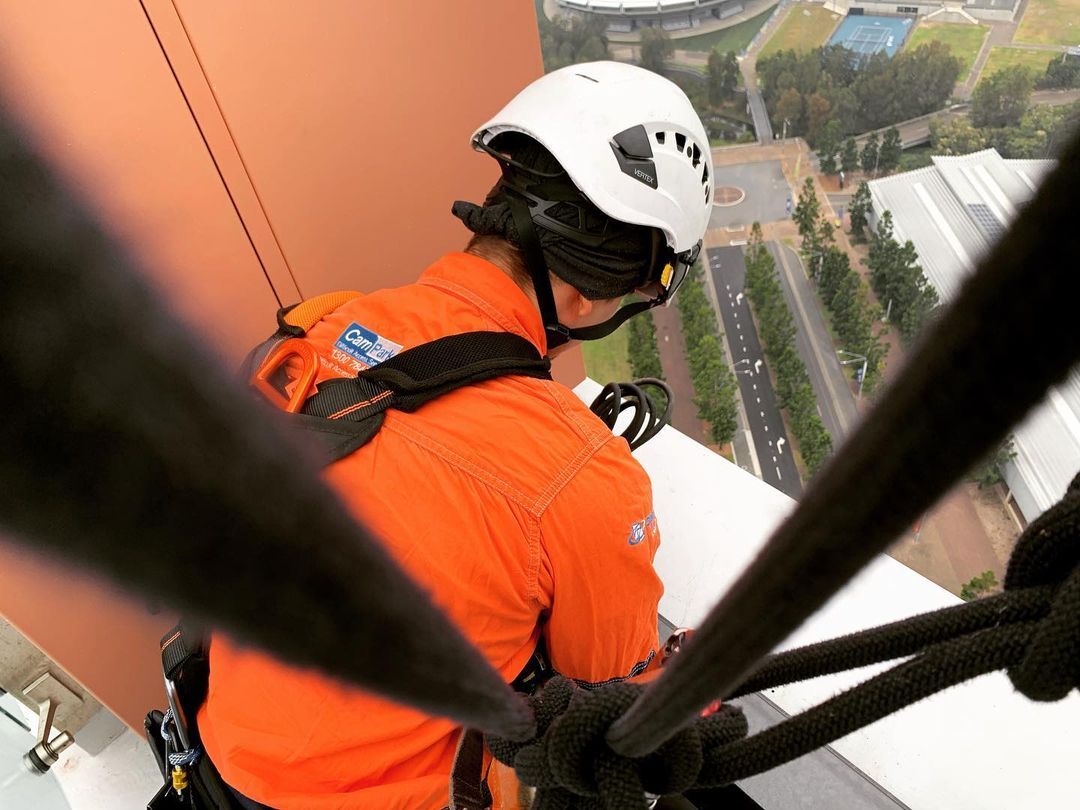
At Difficult Access Services, we deliver professional concrete sealing for buildings of all types across Sydney. Where we truly stand apart is in our ability to tackle high-rise and hard-to-reach structures that other contractors simply can't service without expensive scaffolding or equipment. Our rope access abseilers descend directly to the work area, giving us precise access to every surface without the need for boom lifts or elevated work platforms. With over 30 years of experience working at height, we apply high-performance concrete sealants that defend against moisture, weathering, and long-term surface breakdown.


For concrete sealing Sydney, let Difficult Access Services protect your building with professional rope access solutions.
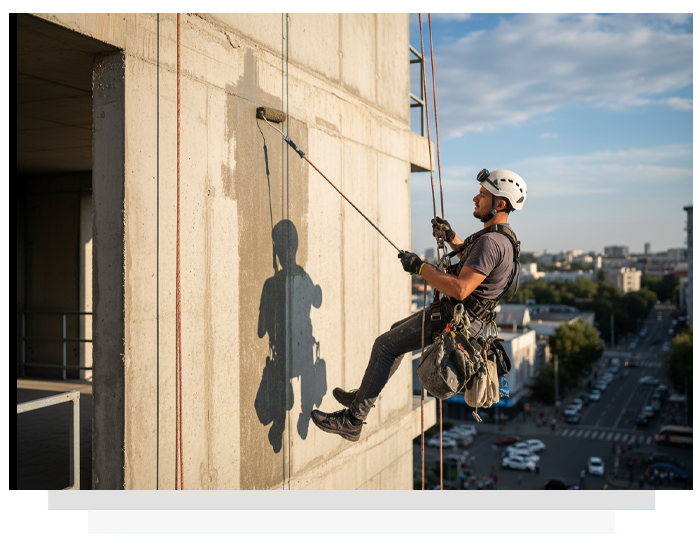
Construction worker painting building exterior, suspended from ropes.

Our Concrete Sealing Services Sydney Include:
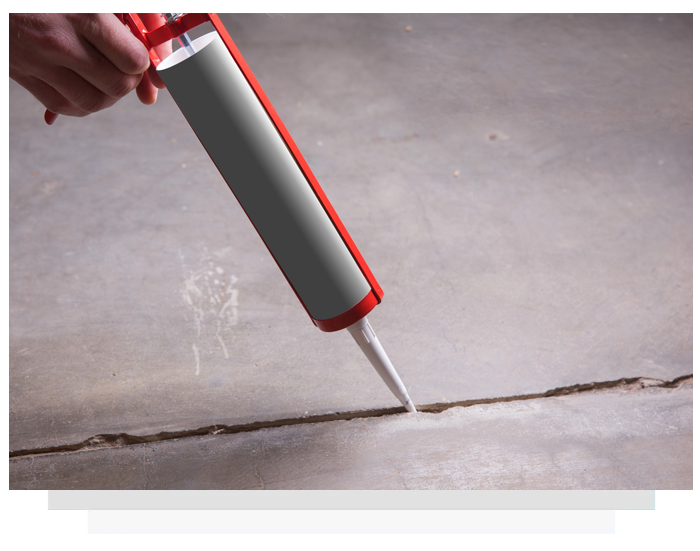
Hand using a caulking gun to apply sealant into a crack on a concrete surface.

Penetrating Concrete Sealers

We apply penetrating sealers that absorb deep into the concrete substrate, forming a protective barrier against moisture, chloride ingress, and chemical attack without altering the surface appearance.
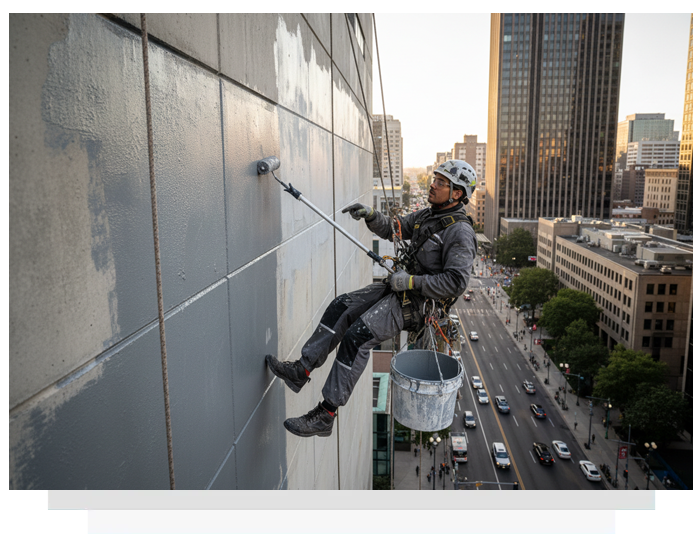
Man painting a high-rise building exterior, suspended by ropes, with city street and tall buildings in the background.

Surface Coating & Film-Forming Sealers

For buildings requiring surface-level protection, a refreshed appearance, or a finish that enhances decorative concrete elements, we apply high-quality film-forming sealants that form a protective layer, shielding against weathering, UV damage, and staining while enhancing the aesthetic appeal of the surface with a clean, consistent finish.
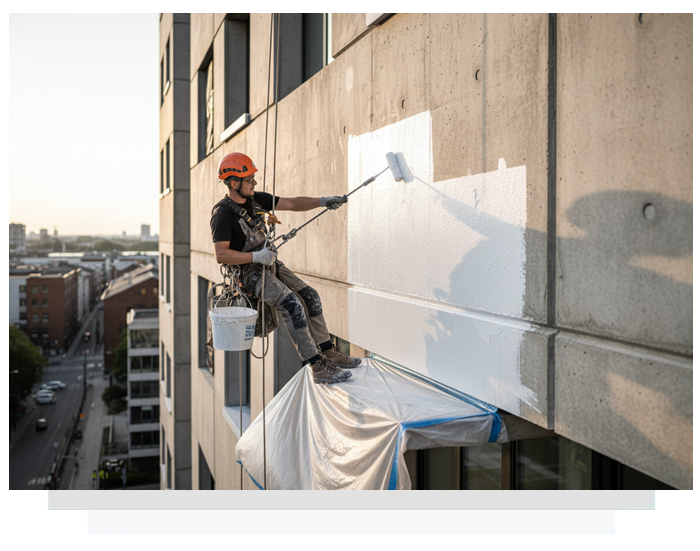
Construction worker painting exterior wall, suspended by ropes, using a roller. City buildings visible in the background.

Anti-Carbonation Coatings

Carbonation is a silent threat to reinforced concrete. We apply specialist anti-carbonation coatings that block COâ‚‚ penetration, helping to preserve the alkalinity of the concrete and protect embedded steel reinforcement from corrosion.
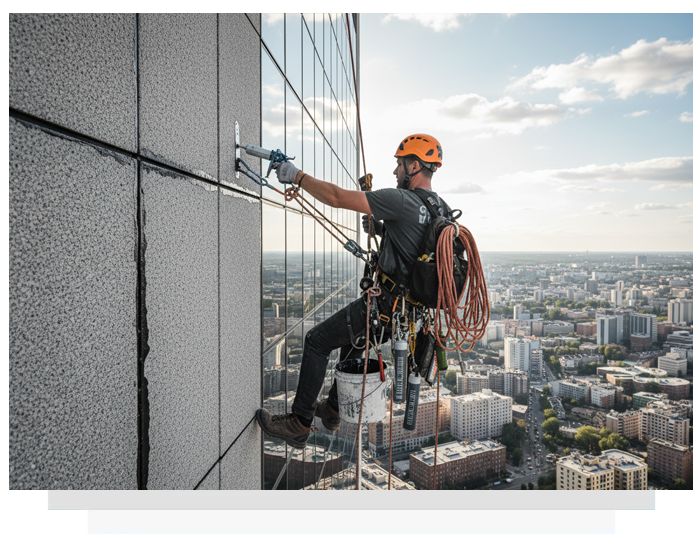
Window washer on a skyscraper, secured by ropes and harness, cleaning glass with cityscape backdrop.

Waterproof Sealing

We apply waterproof sealants to outdoor surfaces including balconies, facades, and structural elements exposed to rain and moisture ingress, reducing the risk of concrete cancer and long-term water damage.
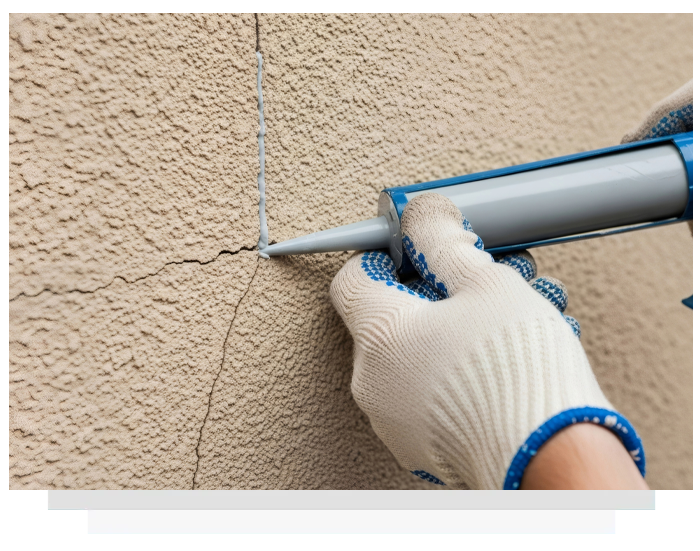
Person applying sealant from a caulking gun to a crack in a beige stucco wall, wearing gloves.

Sealing After Concrete Repairs

Freshly repaired concrete needs protection too. Whether following concrete resurfacing or patch repairs, we seal restored areas as part of our process, locking in the work and extending the life of the repair significantly.
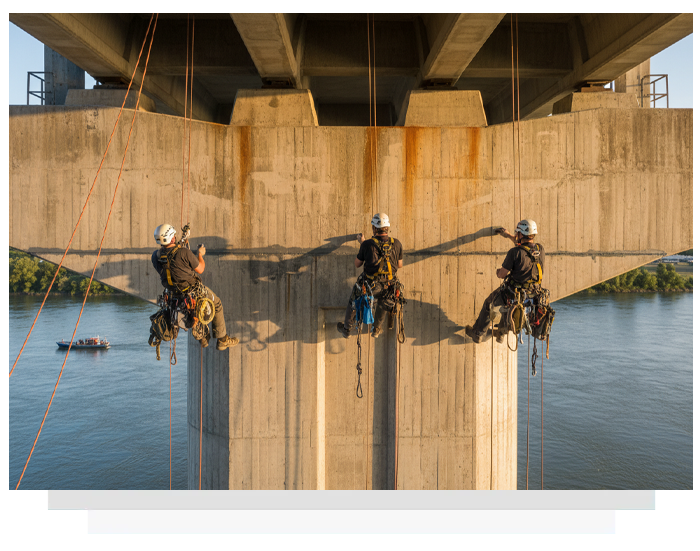
Three workers rappel down a concrete bridge column, inspecting it. Sunlight illuminates them.

Concrete Joint Sealing

We seal gaps between adjoining concrete slabs and masonry surfaces, maintaining structural integrity and preventing moisture from working its way into joints in outdoor spaces over time.
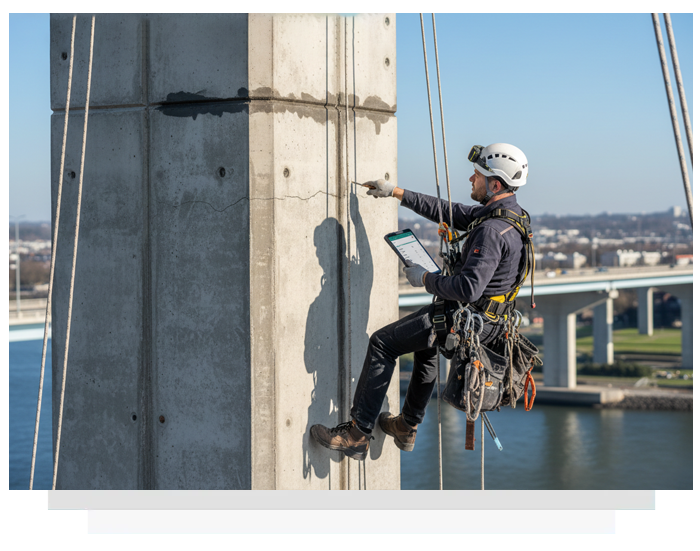
Man inspecting concrete pillar with clipboard, suspended by ropes, near bridge and water.

Concrete Sealing Inspections & Condition Reports

Not sure whether your building's concrete needs sealing or resealing? We conduct thorough on-site inspections and deliver detailed condition reports with clear recommendations.

The Difficult Access Difference

height safety tools

Specialists in Rope Access

Our abseilers work directly from the roofline. No scaffolding to erect, no boom lifts to position, no road closures to arrange, and no inflated costs passed on to you. For complex or tall structures, this makes us the go-to concrete sealing Sydney team where others can't easily follow.

high rise building

Decades of Experience in High-Rise Maintenance

With over 30 years working on Sydney's buildings, including some of the city's most challenging high-rise structures, we bring deep knowledge of concrete behaviour, sealant products, and surface preparation to every project.

hand with safety shield

Minimal Disruption, Maximum Efficiency

Rope access requires no heavy equipment on the ground and minimal setup time, meaning building occupants and pedestrians are barely aware we're there.

checklist

Compliance & Safety First

All our concrete sealing Sydney services are carried out in full compliance with Australian standards and industry safety regulations. Our abseilers are rigorously trained and certified.
Concrete Sealing Sydney FAQs

  • Why does concrete need to be sealed?

    Concrete is porous and naturally absorbs water, salts, and airborne contaminants over time. And even ordinary concrete in good condition is vulnerable without a proper sealant. Without a sealant, moisture penetrates the structure, corroding steel reinforcement and eventually leading to cracking, spalling, or concrete cancer. Sealing reduces moisture penetration, which can lead to crack formation and erosion. Beyond structural protection, sealing also improves the appearance of concrete surfaces, inhibits the growth of mould and mildew, and makes concrete surfaces easier to clean and maintain. A quality sealing treatment is one of the most cost-effective steps a building owner can take.

  • How do I know if my building's concrete needs resealing?

    Common signs include visible staining, surface discolouration, or areas where previous coatings are peeling or breaking down. A simple indicator is water behaviour: if water no longer beads on the surface and instead absorbs in, it's likely time to reseal. When in doubt, a professional inspection is the most reliable way to assess the condition and determine whether concrete resealing is warranted.

  • What types of concrete sealers do you use?

    There are two main categories: penetrating sealers, which absorb into the substrate to protect from within without changing the concrete surface appearance, and topical or film-forming sealers, which coat the surface and can enhance its look. In Sydney's climate, UV resistance and salt corrosion resistance are particularly important considerations for coastal high-rise buildings. So when providing concrete sealing services, we assess each building's specific exposure and substrate condition before recommending the most appropriate product.

  • How is rope access concrete sealing different from using scaffolding or a boom lift?

    Scaffolding and boom lifts are expensive, slow to set up, and may require road occupancy permits or traffic management. Rope access allows our abseilers to descend directly from the roofline to any point on the façade to carry out concrete sealing services in a fraction of the time, resulting in lower costs, faster completion, and far less disruption to occupants and the public. For multi-storey and hard-to-reach structures, the difference is particularly significant.

  • How long does a concrete sealing treatment last?

    It depends on the sealant type and the degree of environmental exposure. Premium penetrating sealers can last 5 to 10 years, while acrylic or film-forming coatings typically require reapplication every 2 to 3 years. As a general rule, regular resealing every 3 to 5 years is significantly cheaper than costly repairs or full concrete replacement down the line. Regular resealing of concrete surfaces is recommended to maintain their appearance and protect against damage. Buildings in coastal or highly exposed locations may require more frequent sealing, and we factor this into the maintenance recommendations we provide after every inspection and sealing job.

  • Can concrete sealing prevent concrete cancer?

    Sealing significantly reduces the risk of concrete cancer by limiting moisture and chloride ingress, the primary causes of reinforcement corrosion. It cannot reverse existing damage, so buildings already showing signs of concrete cancer or requiring concrete resurfacing should have repairs completed before sealing is applied.

  • Are there any conditions that affect how sealing is applied?

    Yes. Surface preparation is critical: concrete must be thoroughly cleaned before a sealer is applied to achieve proper bonding. Temperature also matters. Sealers should ideally be applied between 10°C and 32°C. Applying sealer to a concrete surface above 35°C can trap solvents and cause adhesion failure. Our team accounts for these conditions when scheduling and carrying out every job to achieve optimal protection.

  • Do you seal concrete after carrying out repairs?

    Yes. Sealing after concrete repairs is strongly recommended and is part of our standard process wherever appropriate. It protects the repaired area from re-exposure to the elements and helps the repair integrate with the existing surface for a longer-lasting result.

  • How do I get a quote for concrete sealing in Sydney?

    Get in touch with our team directly via phone or our contact form. We’ll discuss your building’s concrete sealing Sydney needs, arrange an inspection if required, and provide a clear, obligation-free quote, so you can feel confident the job will be completed to an amazing job standard.

LET THE DIFFICULT ACCESS TEAM HANDLE YOUR CONCRETE SEALING NEEDS